“I realised I constantly felt something was missing without tennis”: the story of coach ambassador Neonila Marushchak
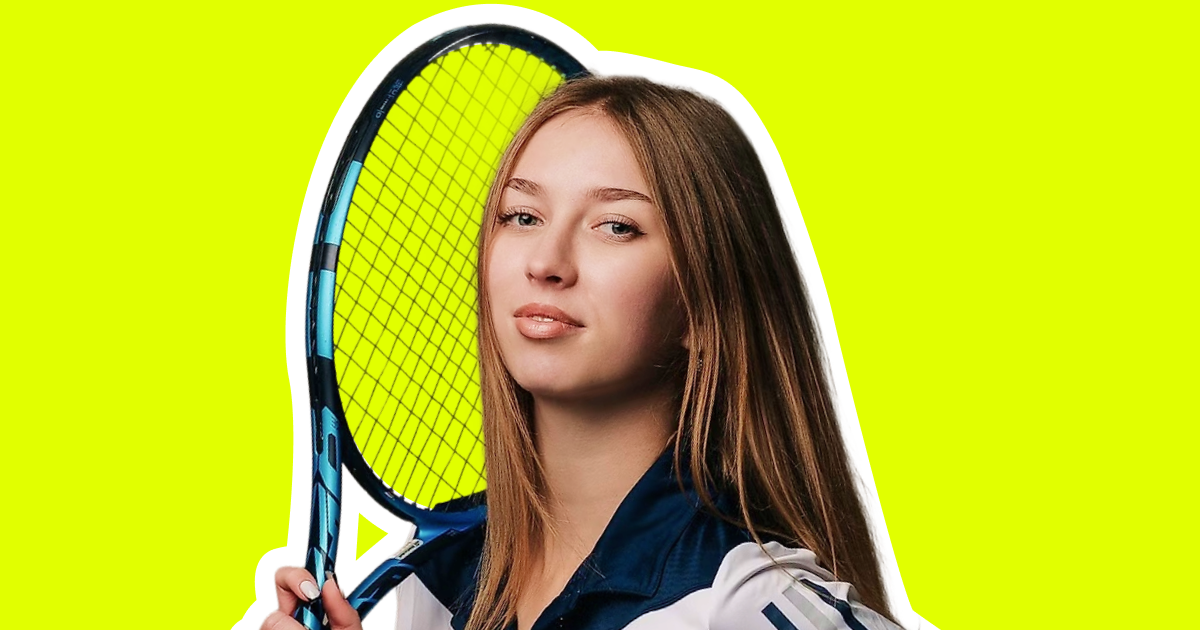
In this series, we share the stories of people involved in the Marta Kostyuk Foundation’s projects. This time, we introduce Neonila Marushchak, a coach ambassador for the School Match Point project who helps children discover tennis.
When Neonila first started playing tennis, she did not even know what kind of sport it was. There was no tennis club in her town, so she had to travel to another town for training. There, she saw older children who were already playing well for the first time: “I watched them and thought: I want to be able to do that one day too.”
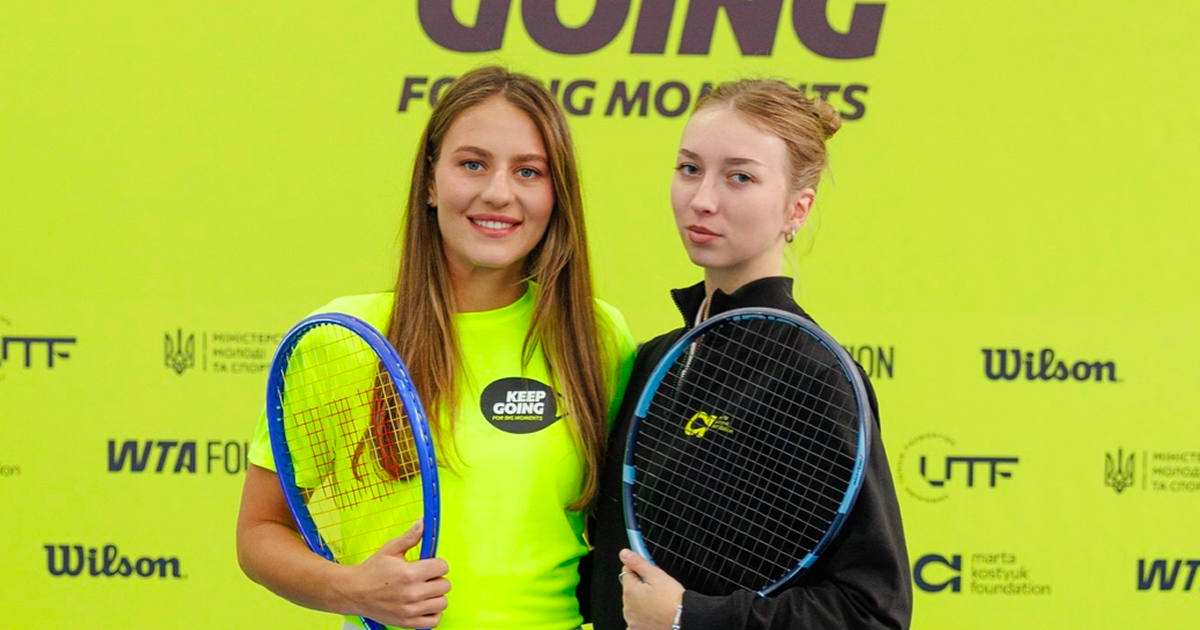
Today, Neonila is twenty years old. She plays tennis professionally, works as a coach, officiates at tournaments and teaches both children and adults. “Everything connected with tennis is about me,” she says with a smile.
It all started with her father’s decision. He loves sport, especially football, and wanted his daughters to be involved in sport too. But football was not something he considered for them, so one day he took them to tennis. That chance choice has now been part of Neonila’s life for fourteen years.
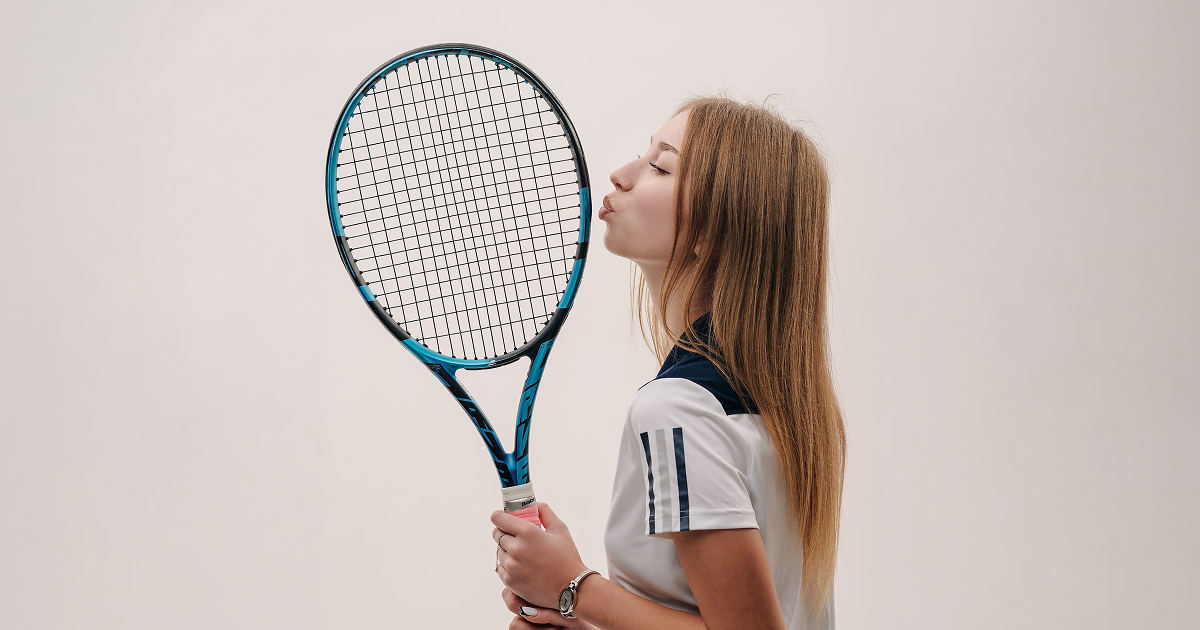
From her first ball to the decision to return to tennis
She still remembers her first training session. Her coach gave her a racket and a ball and said: “Try to bounce it twice.” She could not do it. She tried again. And again. It seemed that almost the entire session was spent doing just that.
Later, at home, her father and sister would toss the ball to her while Neonila tried to hit it with her racket. Then, one day, she finally managed it. “I was so happy,” Neonila recalls. Sometimes a great love of sport begins with small victories like these.
At one point, Neonila decided to try a different path. She moved to Slovakia to study IT. But after just two months, she realised: “I understood how much I missed tennis.”
She found a local club, asked the coach if she could play and started coming to the court. During that period, she also missed home a lot.
“I would come to the court and think about my friends and my town. That was when I realised I wanted to go back and do what I love.”
Neonila has not changed her mind since.
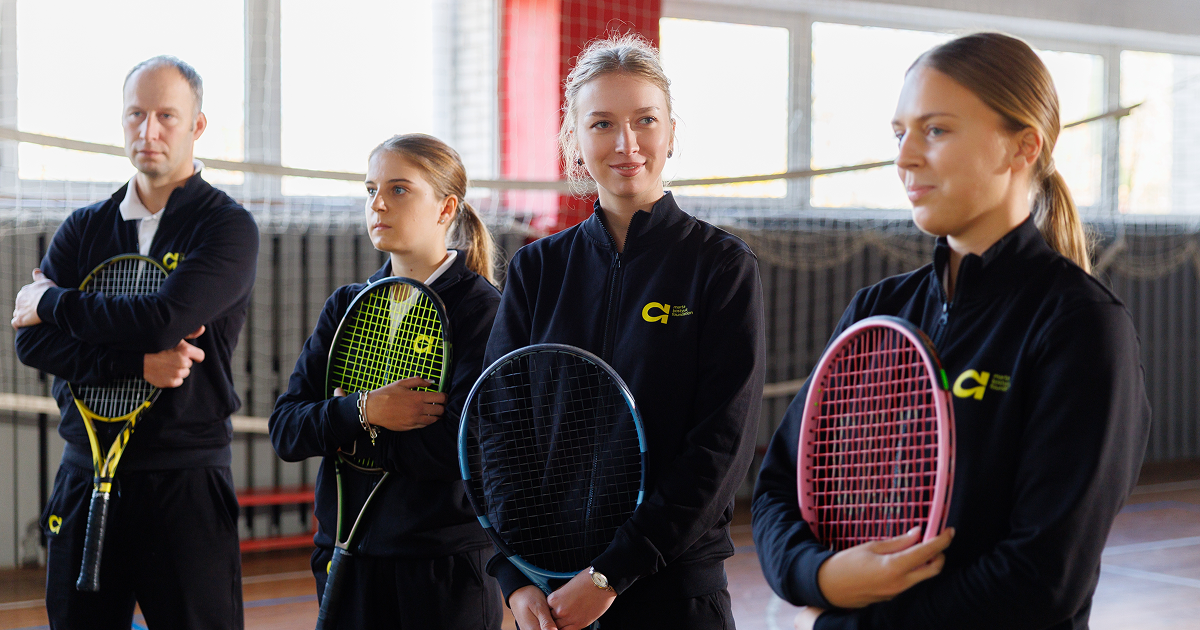
“At my school, the girls just sat on the bench”
The School Match Point project immediately resonated with Neonila. It reminded her of her own PE lessons: “The boys played football, while the girls just sat on the bench.”
At first, she could not even imagine how tennis sessions could be held in an ordinary school sports hall. But after the first few lessons, she realised that it worked. For many children, these sessions are their first opportunity to pick up a tennis racket.
One child Neonila remembers most was a boy with cerebral palsy. He found it difficult even to hold the racket, but he did not give up. Eventually, he managed to bounce the ball several times and then asked to play with his classmates. The teacher accompanying him joined him as his partner.
“After the lesson, he said he wanted me to come back. So they could have tennis again.”
Neonila describes this as the most emotional moment she has experienced during her time working on the project.
Working with so many children was also unfamiliar to Neonila at first. She usually coaches small groups of around ten people. At school, it was completely different: thirty children, two classes and one sports hall. “It was a bit of a shock at first,” she says with a smile.
Gradually, Neonila found an approach that worked. The children enjoyed it most when they could move from exercises to playing. Relays, small competitions and playing over the net became the most anticipated parts of the lesson.
At first, not everyone was ready to join in. Some were shy, while others simply watched. This was particularly noticeable among the older pupils. “At first, they sit on the bench. But as soon as they see us playing over the net, they’re like: ‘I want to play too!’”
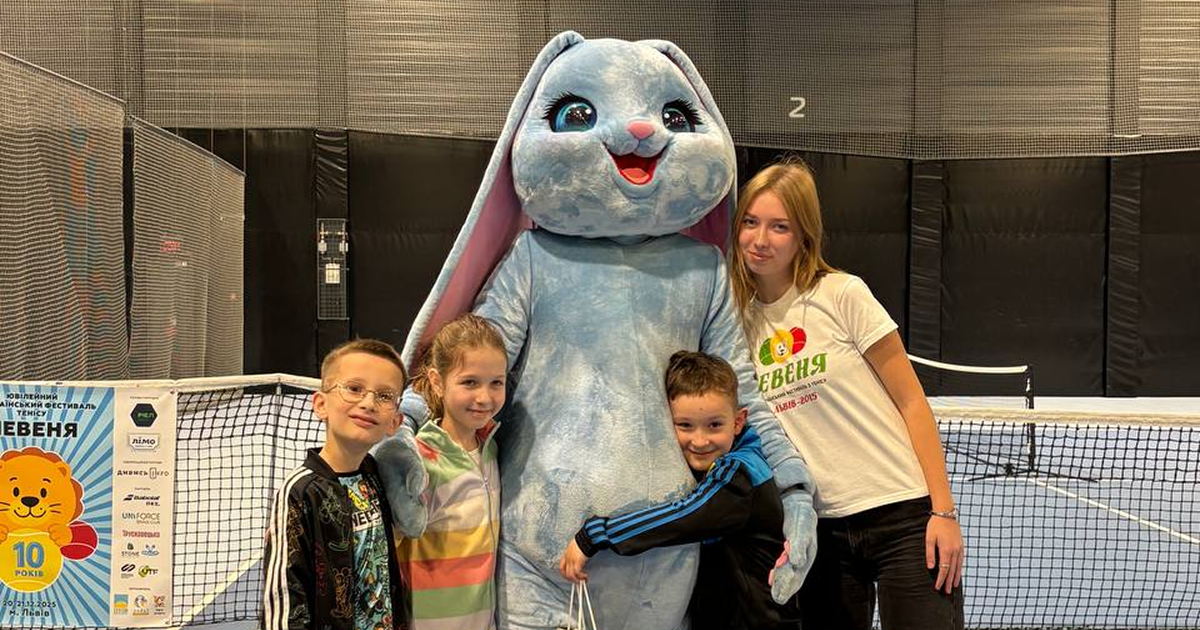
That, Neonila says, is when it gets most interesting. The child no longer needs convincing — they want to pick up a racket and give it a try. After the sessions, some of the children joined Neonila’s regular tennis classes. A few have now been playing for more than six months.
“The most important thing is that it has to be your choice”
Neonila knows well that tennis can be difficult. There are losses. There are days when you do not want to go to training. She has had them too. That is why she always tells her students one thing: “You have to enjoy tennis. It has to be your choice, not your mum’s or dad’s.”
Not every child who picks up a racket for the first time at a School Match Point session will become a professional athlete. But that is not Neonila’s goal. For her, it is much more important that a child discovers a new sport and understands that tennis is not something distant or out of reach.
I hope that after our sessions, they will play on a real tennis court at least once, rather than only in a school sports hall.
Over the years she has spent coaching, Neonila has seen all kinds of children. Some were talented, some progressed quickly, and some simply stopped coming one day. “I know many children who played very well until they were fourteen or sixteen. Then they just left tennis.”
Because of this, she rarely talks to her students about winning. Instead, she constantly reminds them: “It has to be your choice, not your mum’s or dad’s.” When the desire to play disappears, talent alone is not enough.
Neonila laughs that there are plenty of emotions in tennis, even for adults. After one tournament, her friend Nastia lost a match and said: “That’s it. I’m not playing anymore. Sell my racket.” The next day, they were already laughing about it together. “It happens to almost everyone,” Neonila says.
According to Neonila, this is where the psychological side of tennis comes in. There are days when it is better simply to rest and then return to the court with renewed energy.
Meeting again in a few years
Neonila does not know how many children from the School Match Point project will ultimately choose tennis. Perhaps only a few, perhaps many more. But what she dreams about is something else: one day, unexpectedly meeting one of them and hearing a simple sentence: “Do you remember me? After that lesson, I started playing tennis.”
For Neonila, that would mean it had all been worthwhile.


“International education became an achievable goal”: Prep School participant Melaniia’s story
From the Olympic Games to the dream of studying in the USA: Prep School participant Alona’s story
“When the coach is calm, children can feel it”: Yuliia Klymenko on tennis, teenagers and working on yourself