“Tennis is a long game”: Yevhenii Fomenko on pressure, parents and psychology on court

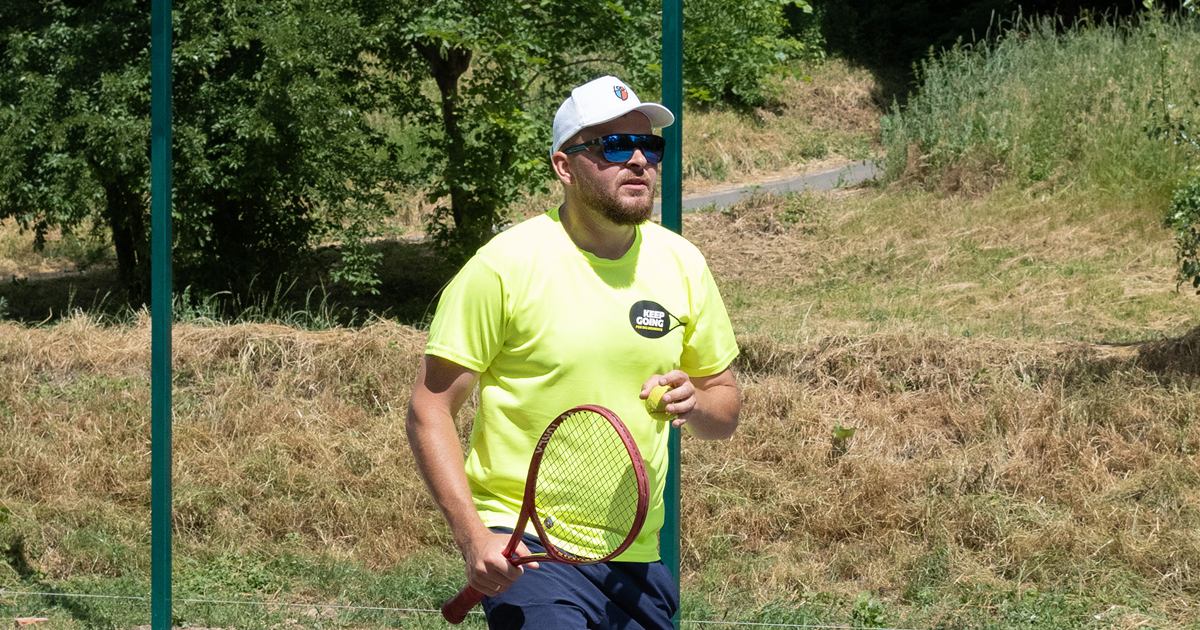
In this series, we share the stories of people involved in the Marta Kostyuk Foundation’s projects. This time, we introduce Yevhenii Fomenko, a coach and participant in the Sports Psychology Scholarship programme.
Yevhenii talks about tennis without grand statements, seeing it instead as a space where it is not only technique that matters, but also what is happening inside a person. He clearly remembers a time when everything worked in training, but as soon as he played in a competition, it felt as though “everything switched off”. That experience eventually led him to sports psychology.
Through the Sports Psychology Scholarship project, Yevhenii gained not only new knowledge but also a language for what he had long observed in himself, his students and the parents of young athletes: pressure, expectations of quick results, fear of making mistakes, loss of focus and the need for long-term, attentive work.
Yevhenii, how did tennis begin for you?
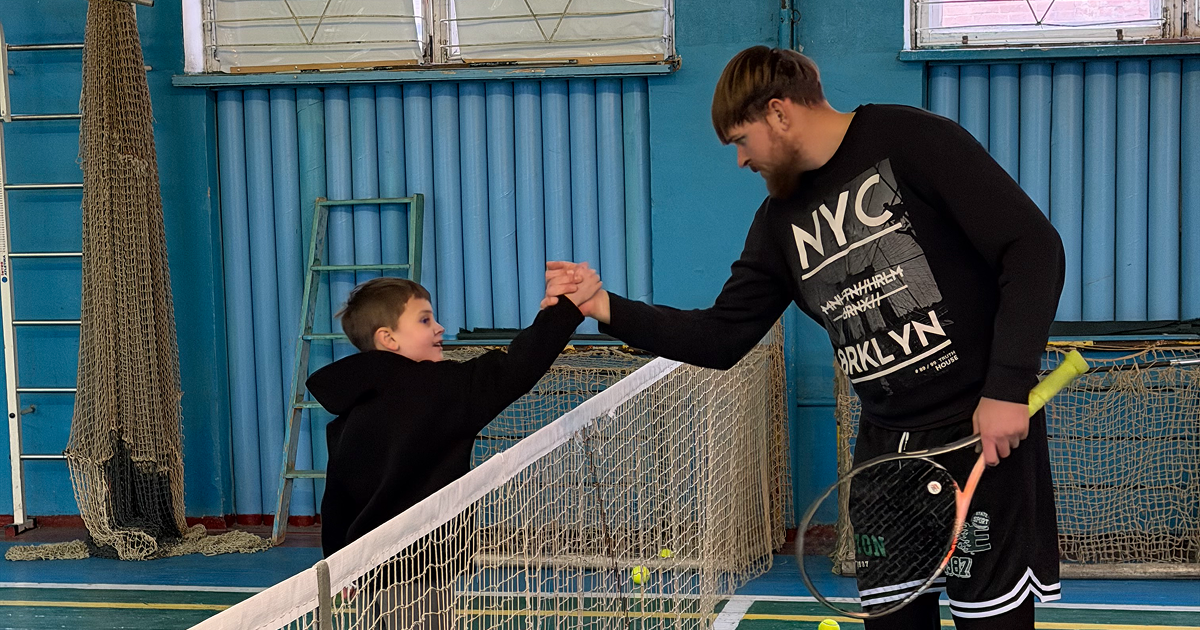
My father introduced me to tennis. I was eight, my younger brother was almost six, and we started training together. Our first coach was very interesting: he knew how to work with children, used jokes and little tricks, and made it genuinely enjoyable for us.
Then things changed. Over time, we had less access to the coach, individual sessions had to be paid for separately, and my father decided to coach us himself. That took us down a more difficult path. He wasn’t a teacher and didn’t really understand how to work with a child who was doing well but was also expressive, demanding and not always obedient. It was a difficult experience for me.
Later, I became more involved in tennis myself. There was a period when I moved to Kyiv, wanted to establish myself at the Admiral club and tried different options. Not everything worked out as planned, but it was still important: I was gradually moving towards coaching independently.
You mentioned that your own experience of pressure had a strong influence on your approach to coaching. What stayed with you from that time?
Probably most of all, the sense that an athlete can be going through something very difficult without having the words to describe it. I experienced a state that I couldn’t explain at the time. Everything worked in training, but when I stepped onto the court — for a competition or even just to play — everything switched off completely.
I didn’t know what to do with it. I didn’t know how to explain it. Instead of explanations, there were often motivational insults, pressure, then even more pressure. And you were left feeling as though you were dealing with it alone.
At my first tournaments away from home, when I was ten or eleven, I often felt like an outsider. I think that was also one of the reasons I became interested in the psychological side of tennis. I wanted to understand what was actually happening to a person in those moments.
“Everything worked in training, but when I stepped onto the court, everything switched off completely.”
When did you first recognise your own experience in the course?
Many of the topics weren’t theory for me, but things I had already lived through. When the course covered psychological overload before a competition, I recognised that state very clearly. I found it interesting that it was identified as something specific, something that could be discussed not as a “weakness” but as a particular process.
The topics around relationships between athletes, coaches and parents resonated with me as well. I have experienced this system from different perspectives: as a child, an athlete, a coach and now also as a parent. So the course never felt detached from real life. It simply gave structure to what I was already seeing on court all the time.
What psychological difficulties do you notice most often in the children you work with?
Very often, a child starts blaming themselves when something they could do in training doesn’t work in a real match. Tennis is technically difficult. You spend a long time refining your movement, strokes and footwork, and then you step onto the court against another person — and suddenly everything is different.
You can see it even in small moments: a child makes a few mistakes, their shoulders drop and they stop listening to the task. They aren’t thinking about the next ball — they are thinking that something is wrong with them. At that point, many children stop analysing the task and start questioning themselves: “Why can’t I do it? Why did I make that mistake?” That self-blame can very quickly undermine confidence.
It is important to me to teach a player to focus not only on the result but also on the task. If a child sees only the ball that didn’t land in the court, they immediately draw conclusions about themselves: “I’m clumsy”, “I can’t do it”, “I’m not capable”. In reality, there can be many factors at play in that moment: technique, attention, tension, pace and the situation on court.
You often say that tennis is a long game. What does that phrase mean to you?
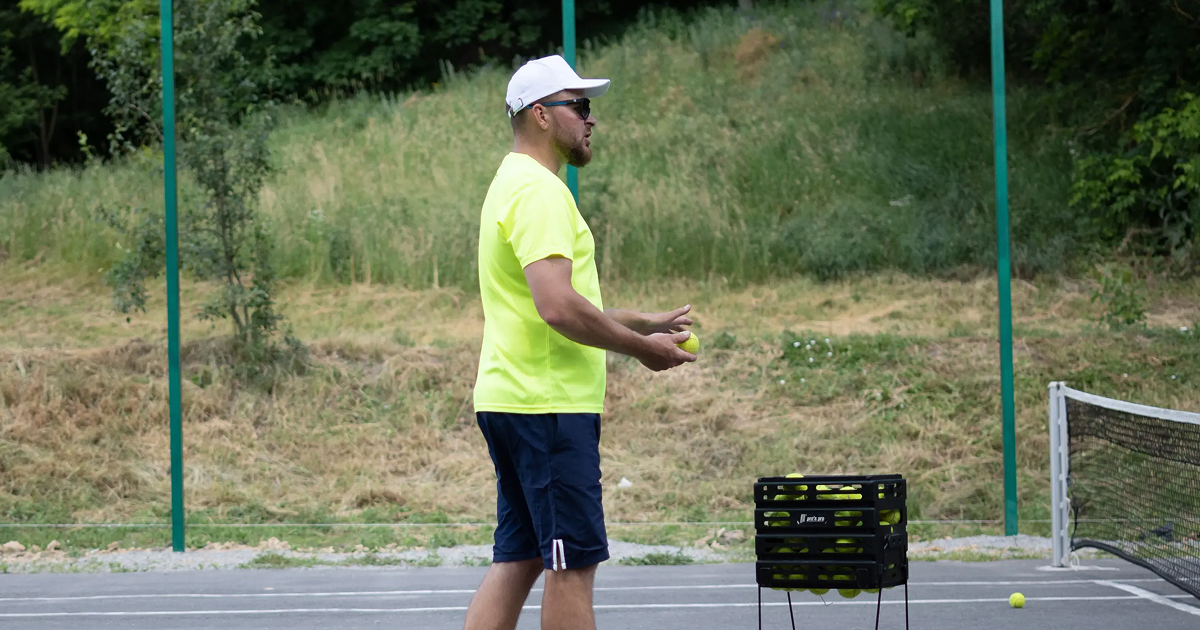
It is one of the main things I try to explain to both children and parents. In tennis, it is very tempting to want quick results. Someone starts playing and thinks, “I’m giving myself six months to learn how to play.” Parents bring their child along and two weeks later are already asking whether they can add another two training sessions a week.
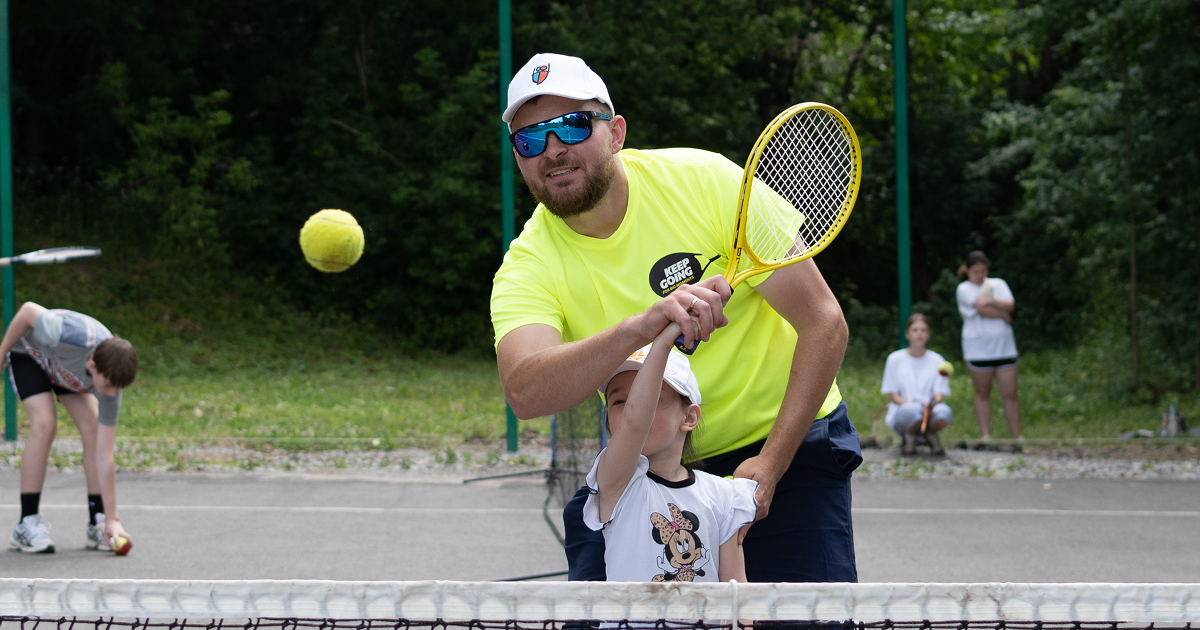
I explain that there is no need to rush. If a child is seven, has only just started and hasn’t previously done anything systematically, they don’t need five training sessions a week straight away. They need to adapt, get used to it and ease into the process. Sometimes I tell parents: it is as though you are borrowing from the future. You can accelerate things quickly, but later the child may struggle physically or psychologically.
Tennis isn’t about “faster, faster, faster”. It is a long game. Even if there is talent, even if there are financial resources, you still cannot skip stages. You need to give the body, the mind, the interest and the character time to develop.
“Tennis is a long game. Even if there is talent, you still cannot skip stages.”
Where do parents come into this?
Parents are a very important part of the process. You cannot simply exclude them. They are an authority figure for the child, they make the training possible and they invest a great deal in it. But that is exactly why it is important to find the right balance with them.
Some parents try to control everything: the coach, the child, every stroke, every decision. On the course, they were referred to as “helicopter parents”. I found it interesting that this happens not only here, but in other countries too. At the same time, it is important to understand that even these parents are often acting out of a desire to help. They are motivators too, and part of the child’s development.
The problem begins when adults focus the child solely on medals, flawless training sessions and quick, visible results. The child then starts thinking not about the process, but about whether they have lived up to someone else’s expectations. And that can affect confidence very quickly.
You also coach your own son. Is that a different experience?
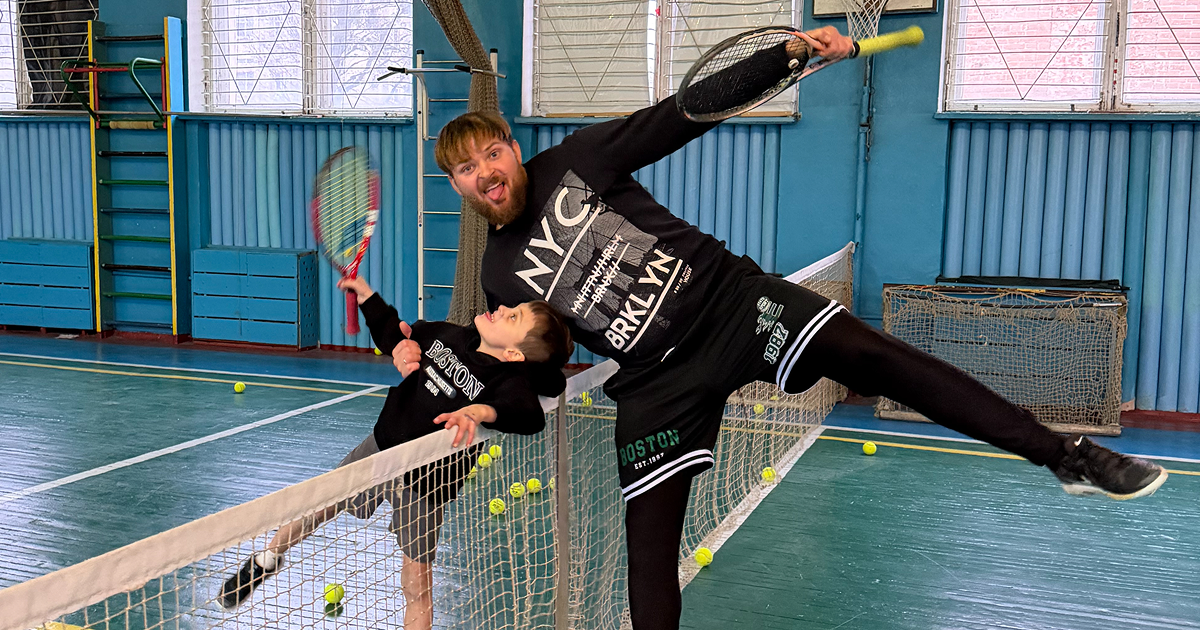
Yes, it is difficult. Sometimes very difficult. I don’t try to demand extraordinary effort from him. He wants to train, but he doesn’t always want to do exactly what I ask. So we try to come to an agreement, although it certainly doesn’t always work.
A playful approach usually works best. Through games, through something that feels partly like play, while still adapting it to appropriate physical activity. I have a set of exercises and techniques that can be introduced through games. I am not pushing him into a structured system yet because I can see that there is already a lot going on in a child’s life: school, first year, new experiences.
Of course, I guide him. But I don’t decide for him that it necessarily has to become a tennis career. If he chooses that himself, then yes. For now, I simply do what I can and try not to turn development into pressure.
Which modules of the course were most important to you?
The modules on attention, motivation and working with parents resonated with me most. I had already worked on attention before and used many things intuitively or through my own experience, but the course helped support that practice with theory.
There were topics on concentrating on the ball, shifting attention from one object to another, and exercises that help improve reaction and the speed at which decisions are processed. These are all very practical things that can gradually be incorporated into training.
The module on parents was also important because it is genuinely a challenging subject. Not in the sense that parents are “bad”, but because without good communication between the coach, the child and the family, the process can very easily become unbalanced.
What stayed with you most about the learning format itself?
Probably the sense of community. The lecturer provided specific information and there were practical assignments, but for me, the communication itself was especially valuable. Questions from other participants, people’s reactions and the discussions created a sense that you weren’t alone in dealing with these issues.
I don’t have that much professional interaction within Ukrainian tennis because I don’t travel to tournaments all the time. So when you listen to other coaches talking about similar situations, see how they respond and realise that these things concern them too, it stays with you.
At first, there were moments when it seemed that something was missing or that an answer to a question was superficial. But then, when I returned to the material and analysed it again, everything gradually opened up. In the end, I could see the full picture.
“For me, the communication itself was especially valuable: you realise that you aren’t alone in dealing with these issues.”
How would you describe the course in your own words?
Useful. Strong. The kind of thing that should be part of a coach’s approach. Because if a coach works with children, simply knowing technique isn’t enough. You need to understand how a child adapts, how they deal with mistakes, how they respond to pressure and how motivation develops.
For me, the course was also about structure. About understanding that groups, levels, tasks, psychological preparation and working with parents aren’t separate pieces, but parts of one process. And if a coach understands this better, they can help a child more effectively.
What do you think Ukrainian tennis lacks most at the moment?
Above all, structure and an environment that allows a child to progress in sport calmly and consistently. Parents often don’t see a clear pathway, so they try to speed up the process or focus on short-term results.
Training like this for coaches helps them take a broader view: looking beyond today’s match or medal towards long-term development. When a coach understands psychological processes, they speak to the child differently, explain things to parents differently and structure training differently. It doesn’t guarantee immediate results, but it creates a healthier process. And in tennis, that is very important.
What would you like parents of young athletes to remember more often?
That a child isn’t a project with a short deadline. They don’t have to be winning within a year, proving their potential to everyone within two, or being flawless at every training session. A child needs time.
You need to see not only the mistake, but the journey. Not only the result, but the task. Not only the ambitions of adults, but also what is happening to the child within the process.
Tennis gradually teaches you to cope with a mistake, move on to the next ball and not draw conclusions about yourself from a single lost point. But that only works when we don’t take away a child’s interest through pressure. For me, the most important thing is not to rush. To give a child the time to learn not only how to play, but also to stay in tennis with their own desire to return to the court.