How to follow professional tennis: a beginner’s guide

The professional tennis tour runs almost all year round. Tournaments take place week after week, players travel between countries and switch from hard courts to clay and grass, while the rankings constantly change depending on results.
If you are only just starting to follow tennis, the system can feel confusing. Why is one tournament called an ATP 250 and another a WTA 1000? Where can you see who your favourite player is facing next? When will the match time be confirmed? And what is the difference between the main ranking and the Race?
We explain how to follow professional tennis, read the calendar and tournament draws, find results and make sense of the ATP and WTA rankings.
Почніть із ATP і WTA
The ATP and WTA are the two main organisations you will regularly come across in professional tennis. The ATP oversees the men’s professional tour, while the WTA oversees the women’s.
Both tours have their own calendars, rankings and tournament categories. On the official ATP and WTA websites, you can find upcoming events, current rankings, match results, player profiles and statistics.
If you are new to tennis, there is no need to understand the entire calendar straight away. Choose a few players you are interested in and start with the tournaments they are playing.

Understand the different tournament levels
Professional tennis tournaments do not all carry the same weight. On the men’s tour, the main categories are ATP Masters 1000, ATP 500 and ATP 250. On the women’s tour, they are WTA 1000, WTA 500 and WTA 250.
The numbers help indicate the level of the tournament and the number of ranking points available to the winner. In general, the higher the category, the more top players are likely to take part.
The four Grand Slam tournaments sit separately: the Australian Open, Roland-Garros, Wimbledon and the US Open. They are not part of the ATP or WTA Tours and have their own organisers. The Australian Open, Roland-Garros and the US Open are organised by the national tennis federations of Australia, France and the United States respectively, while Wimbledon is organised by the All England Lawn Tennis Club. However, results from all four tournaments count towards the ATP and WTA rankings.
For beginners, following the Grand Slams and the biggest ATP and WTA events is a simple way to start understanding the structure of the season.
How to read the tennis calendar
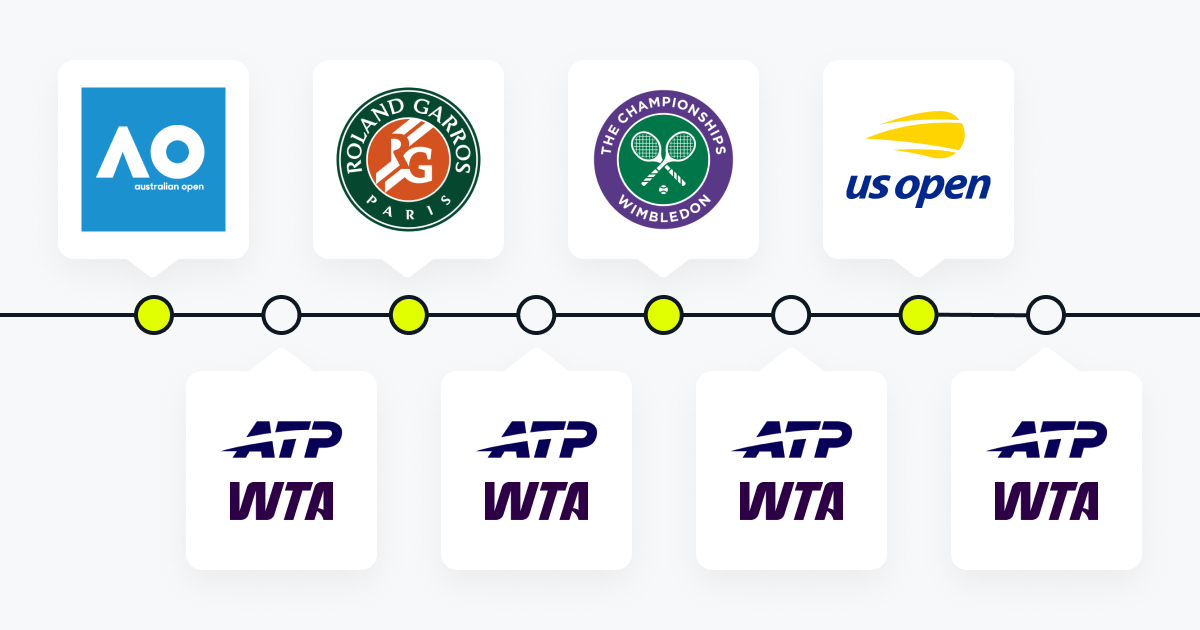
The professional tennis season is made up of tournaments held in different countries and on different surfaces.
At the beginning of the year, much of the calendar is played on hard courts, with the Australian Open as the first Grand Slam of the season. In spring, the tour moves onto clay, culminating in Roland-Garros. Players then switch to grass ahead of Wimbledon before returning to hard courts. The final Grand Slam of the year is the US Open. ATP and WTA tournaments of different categories take place around these major events throughout the season.
Players do not compete in every tournament on the calendar. If you are following a particular player, it is worth checking the entry list for each upcoming event.
Where to see who is playing whom
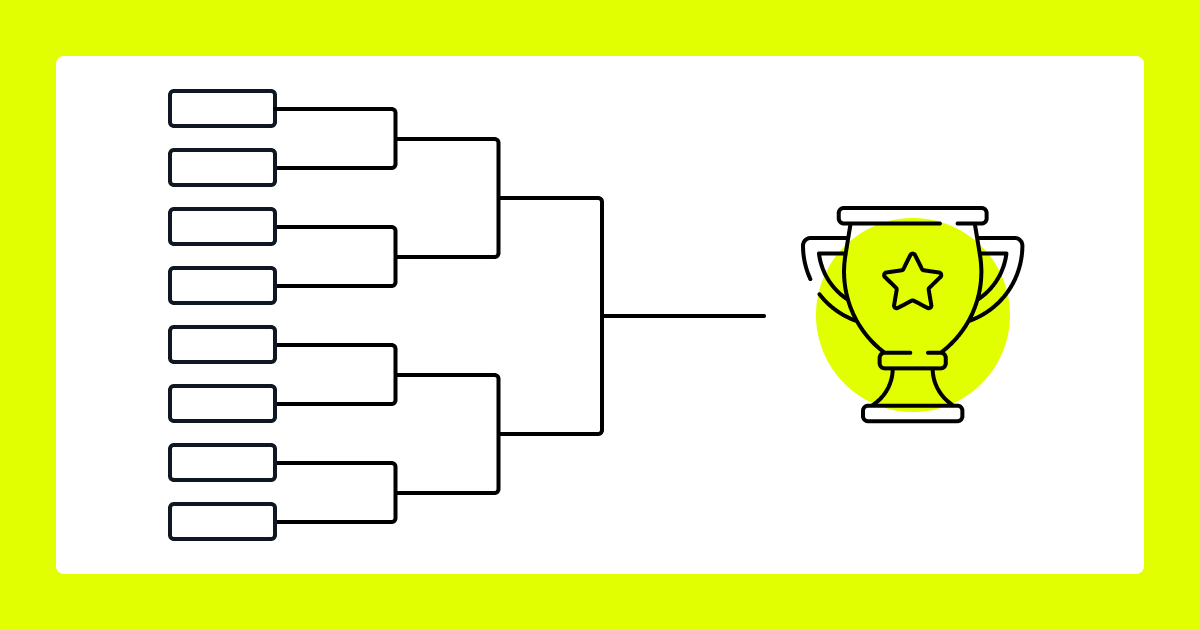
Before a tournament begins, the draw is published. The draw shows who each player will face in the first round and who they could potentially meet later in the tournament. It allows you to follow a player’s possible route to the final and see at which stage different players might meet.
For example, before the tournament starts, you may be able to see who could become a potential third-round or quarter-final opponent. It is only a possible route, of course: each player first has to win their earlier matches.
Draws are usually available on the official ATP and WTA websites or on the tournament’s own website. During the Grand Slams, the official tournament sites are often the most convenient place to follow the draw.
How to find out when the next match is
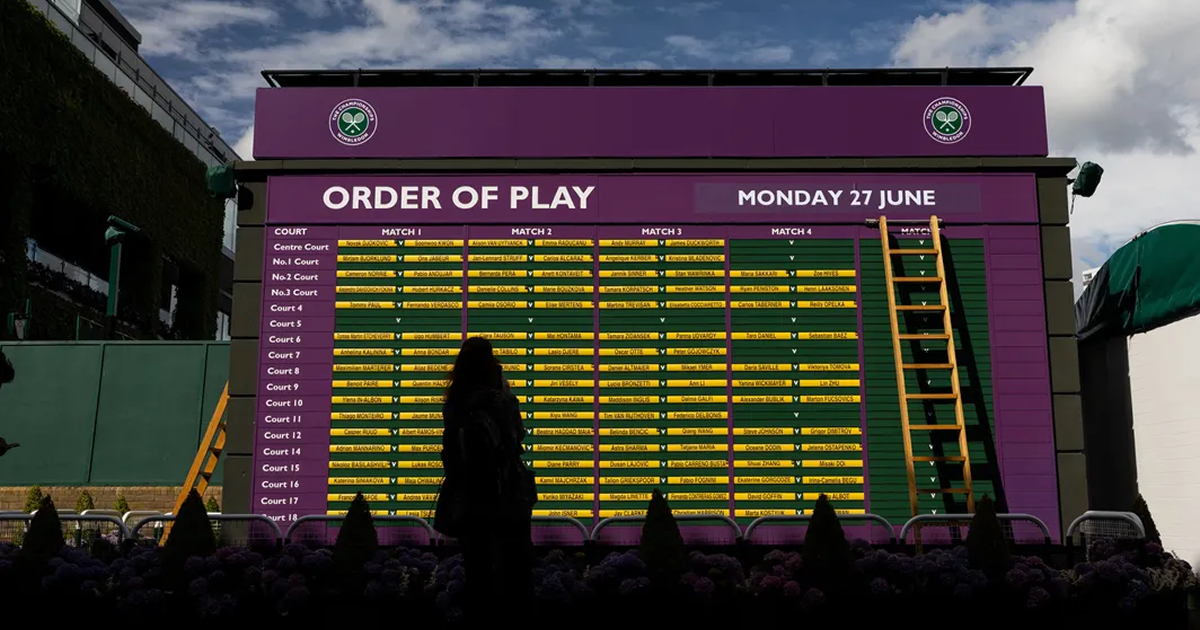
The draw shows the opponents, but it usually does not give the exact match time. For this, tournament organisers publish the order of play — the schedule for a particular day. It shows which court each match is assigned to and the order in which matches will be played.
The actual start time of a tennis match often depends on the matches before it. If a player is scheduled third on a particular court, their match will begin after the first two are completed, and those matches can vary considerably in length.
On match day, it is therefore best to check the latest order of play and then keep an eye on the matches taking place beforehand.
Images: Getty Images
Where to follow match results
If you cannot watch a match live, you can follow it through live scores. The official ATP and WTA websites provide up-to-date match scores, and during major tournaments live scores are also available on the tournament websites.
These allow you to follow the current score, completed sets and the progress of the match. Sports apps and live-score services can also be useful if you want to keep track of several tournaments at once.
For official information about a tournament, draw or schedule, however, it is best to check the website of the relevant tour or tournament.

Images: wtatennis.com
How to read the ATP and WTA rankings
The world rankings show where a player stands relative to other professionals. A player’s position depends on tournament results and the number of ranking points they have earned. In general, the higher the level of the tournament and the further a player progresses, the more ranking points they can collect.
The rankings change throughout the season as new results are added and older ones eventually stop counting. This is why tennis players are often described as having to defend ranking points.
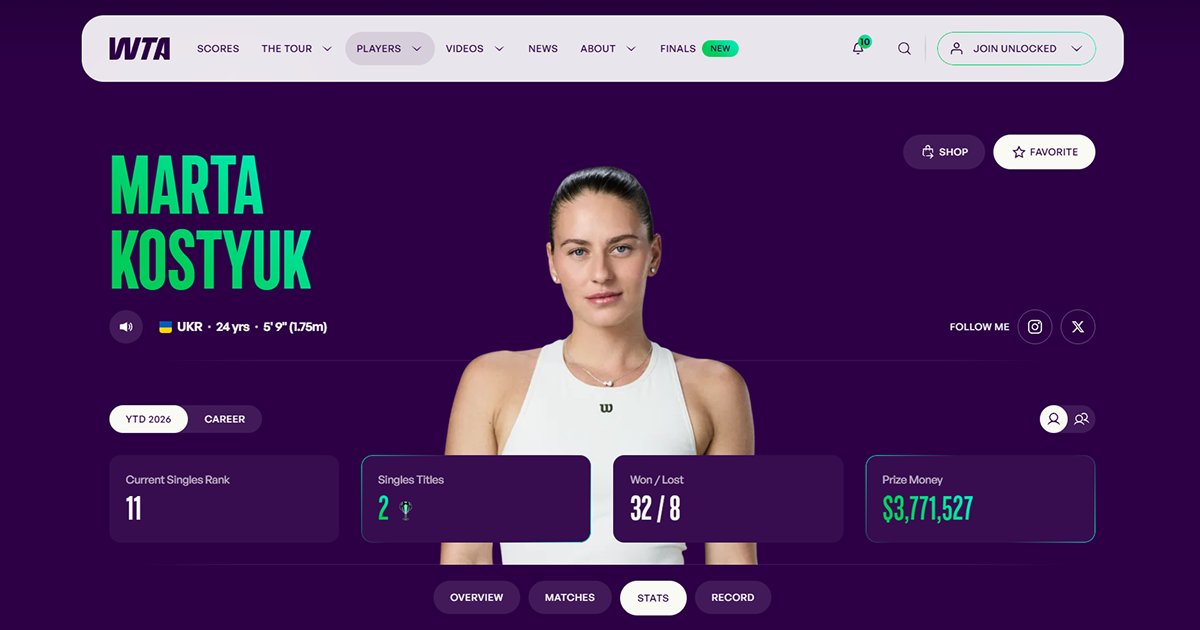
The official ATP and WTA websites show each player’s current ranking position and points total. If you follow a particular player, ranking changes add another layer of context to every tournament: the result of a single match can affect where they sit in the world rankings.
Images: wtatennis.com
Ranking and Race: what is the difference?
Alongside the main ranking, you will also see another table during the season — the Race. The main ranking shows a player’s current position in the world and is based on results across a rolling 52-week period. The Race, by contrast, tracks results earned during the current season and helps show who is in contention to qualify for the ATP Finals or WTA Finals.
Which one you look at depends on what you want to know. For a player’s current position in world tennis, check the main ranking. If you want to see who is having the strongest season and moving closer to the Finals, look at the Race.
Which statistics are worth following
Once the basic structure of professional tennis starts to make sense, statistics can help you read matches in more detail. Useful figures include aces and double faults, first-serve percentage, points won on first and second serves, and break points created and converted.
Another common statistic is head-to-head, or H2H. This shows the history of previous meetings between two players: how many times they have played and who has won more often.
Previous results do not determine what will happen next, though. Surface, current form, physical condition and the specific conditions of a tournament can all affect a match. Statistics are most useful as context rather than as a guarantee of the result.

Images: wtatennis.com
Where to find information about professional tennis
For most everyday questions, a few official resources are enough. The ATP website is the place to check the men’s rankings, ATP Tour calendar, results, player profiles and statistics. The WTA offers the same type of information for the women’s tour.
When following a specific tournament, it is useful to visit its official website. That is often the easiest place to find the draw, order of play, results and live updates. The Australian Open, Roland-Garros, Wimbledon and the US Open all have their own official sites.
For official tennis rules or information about lower levels of professional competition, World Tennis is the relevant source. It is the international governing body for tennis and was known as the International Tennis Federation, or ITF, until 2026.
There is no need to rely on one website for everything. Rankings and calendars are easiest to check through the ATP or WTA, tournament-specific information is often best found on the tournament website, while rules can be found through World Tennis.

What sits beyond the ATP and WTA Tours
The world’s best-known tennis players regularly compete on the ATP and WTA Tours, but the professional tennis system extends beyond the main tours. Below the main men’s tour is the ATP Challenger Tour, while women’s tennis has WTA 125 tournaments. Further down the tournament structure is the ITF World Tennis Tour, which includes both men’s and women’s events.
These tournaments feature players at very different stages of their careers: some are just starting out professionally, others are improving their position in the rankings, while some are returning to competition after time away. Players can earn ranking points at these events and gradually work their way towards higher-level tournaments.
Over time, there is plenty to follow beyond the world No. 1s. Watching a player progress from ITF events and the Challenger Tour or WTA 125 level to the biggest tournaments can sometimes be just as interesting as following the matches of established stars.
Where to start
You do not need to follow every tournament, ranking and dozens of players at once. Start by choosing a few players you enjoy watching, find them in the ATP or WTA rankings and check which tournaments they are playing next. Once the draw is published, look at their first-round opponent, and on match day check the order of play.
Gradually, tournament names, categories and surfaces will become familiar. From there, you can start following ranking changes, the Race, match statistics and younger players competing on the Challenger and World Tennis Tours.
To begin, it is enough to choose a player, find their next tournament and open the draw. From there, the professional tennis season starts to make much more sense.