“Tennis is about atmosphere”: the story of coach-ambassador Valeriia Paraniuk
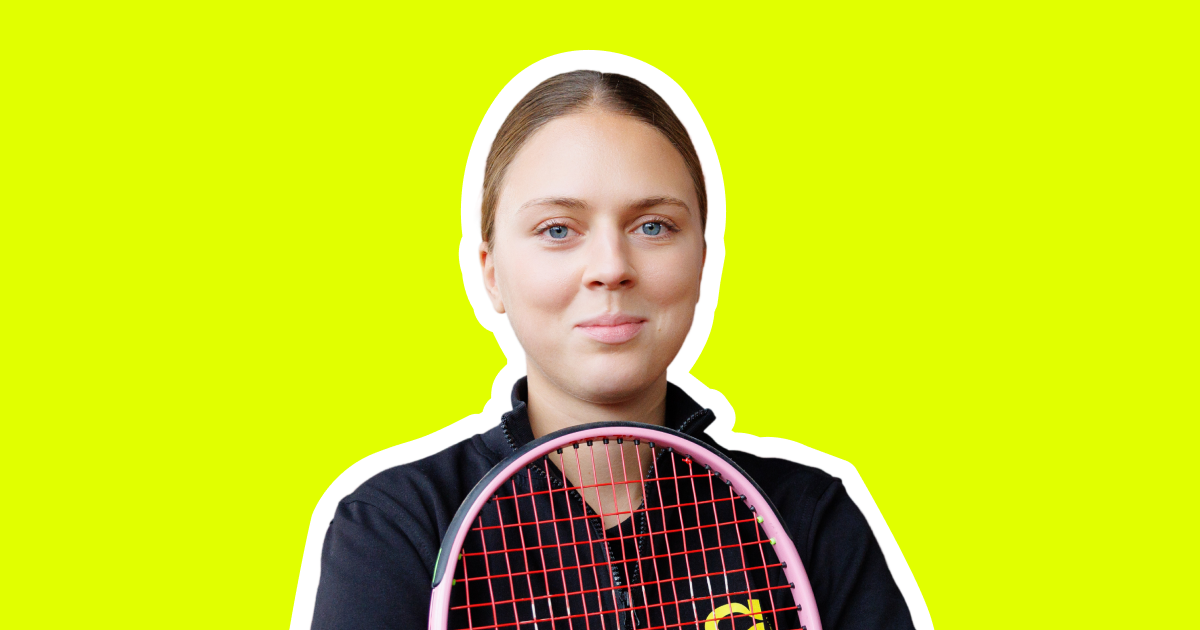
In this series, we share the stories of people involved in the Marta Kostyuk Foundation’s projects. This time, we introduce Valeriia Paraniuk, a coach ambassador for School Match Point who helps children and teachers discover tennis.
Valeriia has been playing tennis since childhood. Today, almost her entire life revolves around it: she coaches children, works at a children and youth sports school, officiates tennis competitions, contributes to the development of wheelchair tennis, plays padel and is gradually trying her hand at coaching padel as well.
“I basically have five jobs,” Valeriia laughs. Even new interests in her life rarely remain just hobbies for long: “Any hobby I start eventually turns into my work.”
When she really needs to recharge, Valeriia chooses much simpler things — lying down, watching a series and getting enough sleep. And if you ask her to describe herself in three words, she recalls a phrase from her Threads profile: “Tennis. Padel. Life.”
Today, Valeriia is also a coach-ambassador for the Marta Kostyuk Foundation’s School Match Point project.
From dancing to the tennis court
Valeriia’s journey into tennis did not begin entirely according to plan. Her parents first took her to a sports school, but they were told she was still too young. So they tried dancing instead: “I couldn’t do anything there at all, and they kicked me out,” Valeriia recalls with a laugh.
She returned to tennis at the age of nine. This time, she was already considered too old to start at the sports school, so Valeriia joined a regular tennis group. Within a few years, she managed to catch up with children who had been training at the sports school. “I was a quiet child and rarely told adults what I actually wanted. Wherever they took me, that was what I did. They asked, ‘Do you want to play tennis?’ — well, I’ll play tennis.”
Over time, tennis stopped being just another after-school activity. Valeriia watched professional matches, was inspired by the players and, like many children on court, dreamed of becoming a professional tennis player herself.
She particularly remembers her last junior tournament in Pushcha-Vodytsia, which she now jokingly calls “the end of my professional career”. The participants spent a week there together, it rained often, but what stayed with her most was the friendly atmosphere among the children.
Tennis is about atmosphere and positive emotions.
If Valeriia could say something today to her younger self just starting to play, it would be: “Don’t be afraid. Believe in yourself. Everything will be fine. Tennis is great and not scary at all.”
What is School Match Point?
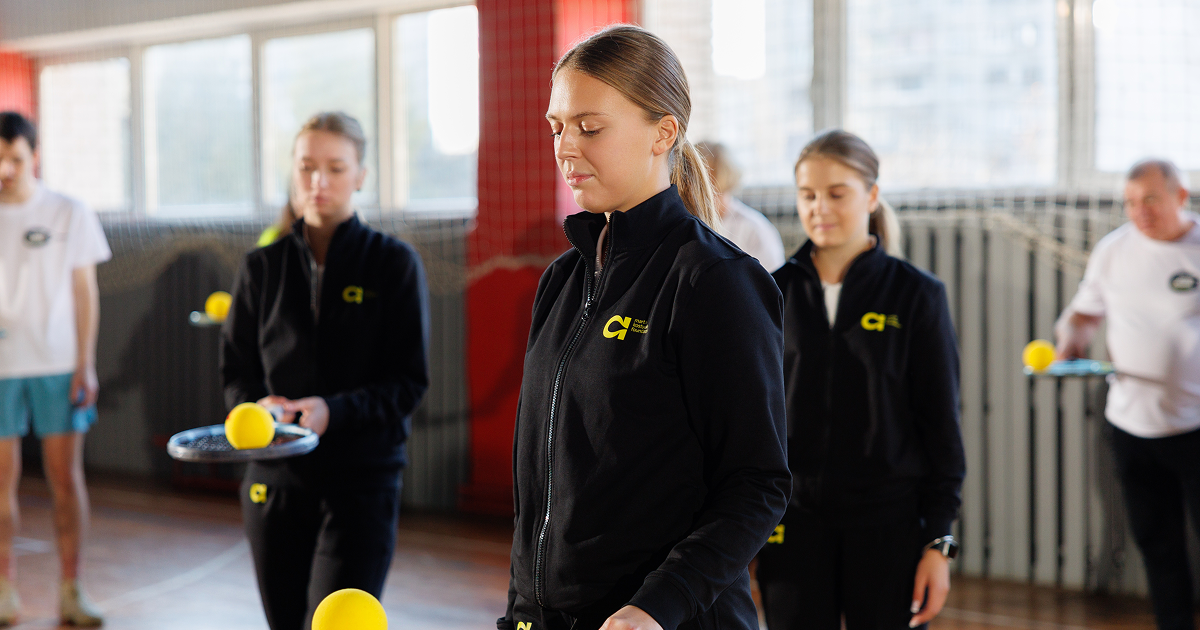
School Match Point is a Marta Kostyuk Foundation project that helps integrate tennis into physical education lessons in state schools. Schools receive equipment, while teachers undergo training so they can run tennis sessions even without dedicated courts.
Coach-ambassadors help teachers learn the methodology and then join them in delivering the first lessons for children. Nataliia Bodnia told Valeriia about the call for coaches. She decided to apply straight away: “I love tennis and I love telling everyone about it. I like Marta both as a player and as a person, so I immediately decided to apply.”
The next stage was an online interview with Talyna Ivanivna, Marta’s mother. Valeriia admits she was a little nervous at the time.
I was a little scared. She is quite a serious, responsible and focused person, and a very demanding coach. But then everything was fine.
After the selection process, the coaches received methodological materials and underwent training themselves. Valeriia and the other coaches then delivered two days of training for physical education teachers, followed by lessons with the children.
Five minutes of tennis instead of a football match
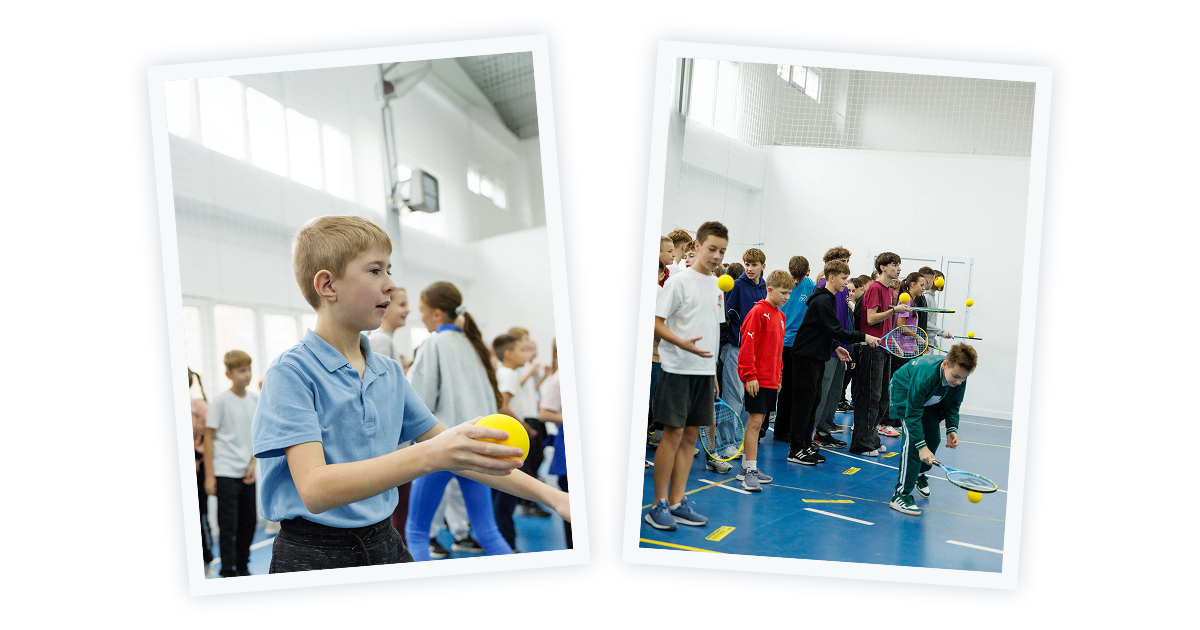
Valeriia remembers one of these lessons particularly well. Before the session, the PE teacher had promised the children a football match, so they were not at all pleased at first when coaches appeared with rackets and balls: “They were like, ‘Oh no, what have they brought us? We don’t want to do this. What even is this?”
The children were asked to try tennis for just five minutes and then return to their planned match. But five minutes was enough: by the end of the lesson, nobody was talking about football anymore: “Everyone was interested by then. They learnt how to hit the ball a little and hold the racket — and they no longer remembered that they were supposed to play that match.”
According to Valeriia, similar situations happened more than once. Some children immediately ran over to see who had arrived and why they had brought “rackets with Minions”, while others initially did not want to join in. But by the end of the lesson, their attitude often changed: “A lot of them already had that spark in their eyes.”
Children who already played tennis sometimes took on a particularly important role. They helped their friends, demonstrated exercises and gradually encouraged others to join the game: “It’s not only about sport. It’s about community, about communication.”
When ability is visible from the first session
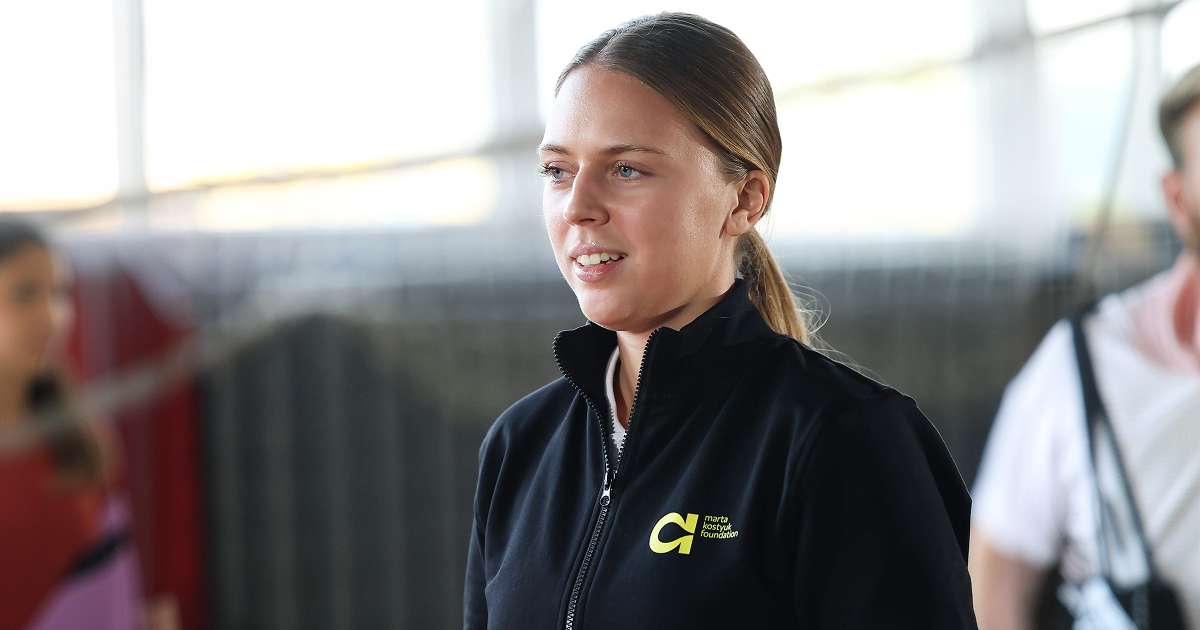
During the first lessons, Valeriia noticed just how differently children handled even basic exercises.
Tennis is very much about coordination. Some children initially find it difficult even to place a ball on the racket and keep it balanced. And then there are those who pick up a racket for the first time and can hit the ball straight away.
Sometimes the very first session can reveal an ability a child did not even know they had. For some, tennis will remain a new experience; for others, it will become a hobby; and some may leave the lesson wanting to join a tennis group and train regularly.
At the same time, Valeriia does not put talent first.
The desire to learn is always number one. Then comes physical preparation: if a child already has a foundation, that’s great and it helps a lot. And of course, you need a little bit of talent too.
That is why, during the first session, what matters to her is not only how easily a particular exercise comes to a child, but also whether they are interested, whether they want to try again and whether they want to keep learning.
When teachers pick up rackets too
While working on the project, Valeriia observed not only the children but also the teachers. Their attitudes towards the new format varied.
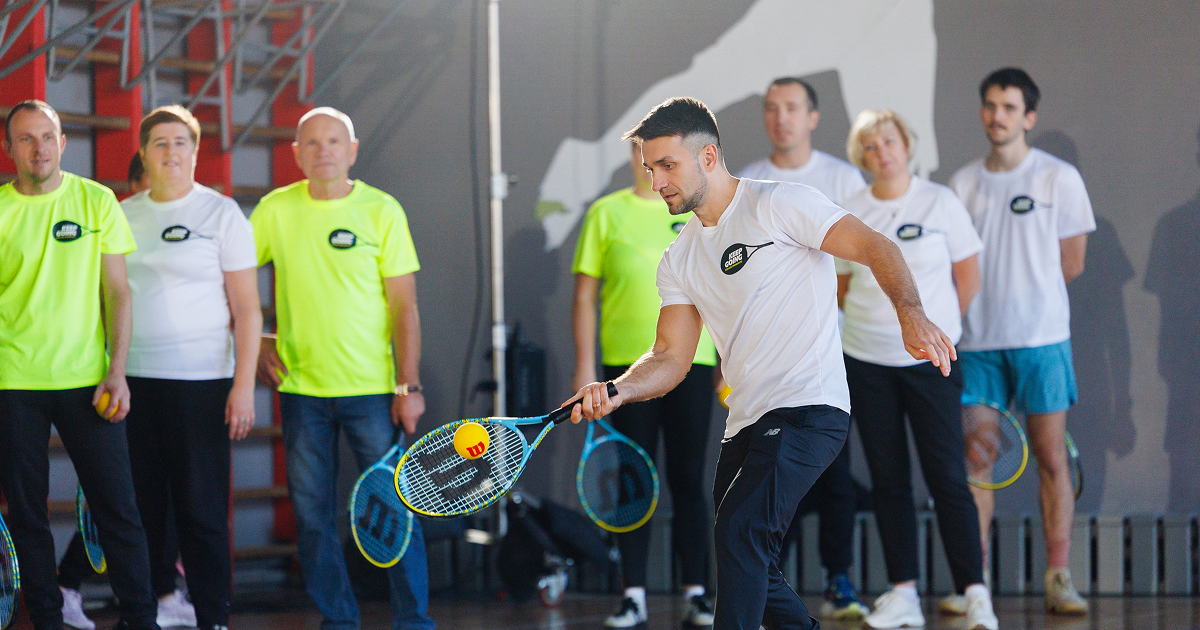
The two-day training took place over the weekend. Some teachers became actively involved straight away: they asked lots of questions and were interested in the exercises and in how best to work with the children. Others were more reserved about the seminar at first: “It was roughly 50–50. Some genuinely wanted to learn, while others were thinking, ‘Why have we been brought somewhere on a weekend to listen to something when we already know everything?”
Once the practical lessons began, some teachers’ attitudes changed. After seeing the children playing, they became more involved in the sessions, asked questions and helped demonstrate exercises.
Some became so interested in tennis that they started training with their colleagues: “I know that some teachers even get together, train and play matches against each other. It’s actually really interesting to see.”
At the same time, Valeriia does not idealise the situation and says that the extent to which tennis becomes part of school life depends largely on the people within the school itself: “There are teachers who don’t really want to introduce anything new, and there are those who are really enthusiastic and want to learn. So a lot depends on the teacher and the headteacher.”
“Wow, this is from Marta Kostyuk”
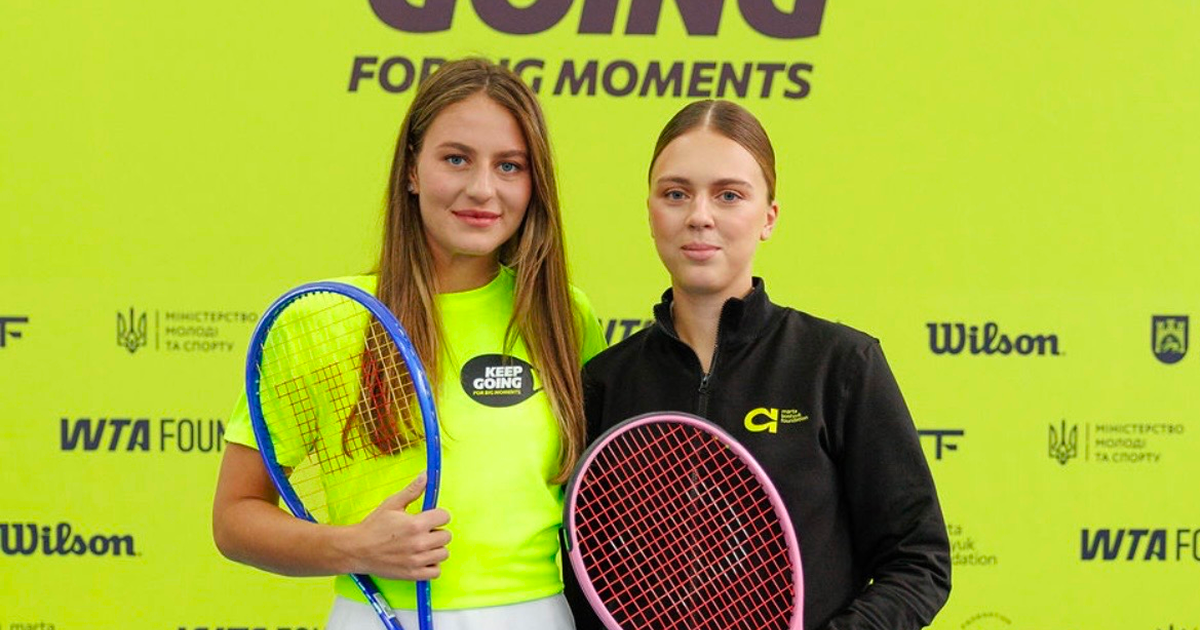
During the first sessions, Valeriia noticed that far from all pupils knew who Marta Kostyuk was. Those who already played tennis were the quickest to recognise her name.
The children who play tennis knew straight away: ‘Wow, this is from Marta Kostyuk, that’s so cool!’ For the others, at first I was just a girl who had turned up with rackets and balls.
After Marta’s masterclass in Lviv, more children began to recognise her name, take an interest in her and follow tennis. Valeriia believes that seeing the achievements of Ukrainian tennis players is particularly important during childhood.
She explains it by imagining herself as a child: “If I had known as a child that tennis had appeared in our PE lessons thanks to Marta, I would have trained and thought: what if Marta comes to our lesson one day and sees how well I play?”
For a child, professional sport suddenly feels a little closer, along with the thought that one day they might be noticed too.
Don’t be afraid to try something new
Valeriia does not know how many children will join a tennis group after their first school lesson. For some, the racket will simply remain a good memory; for others, tennis will become a new hobby; and some may one day decide to train more seriously.
If, ten years from now, one of the children she is introducing to tennis today plays in a professional tournament, Valeriia knows exactly how she will feel: “I’ll be very happy. I’ll feel proud that I played a part in it too.”
And to children who look at a racket today and think, “Tennis isn’t for me”, Valeriia advises them not to make up their minds before giving it a try: “Don’t be afraid. Try something new. Play, watch tennis, feel it. Because tennis isn’t only about sport.”