US Open 1973: the story of equal prize money at a Grand Slam

In 1972, Billie Jean King won the US Open. She received $10,000 for the title. The men’s champion, Ilie Năstase, received $25,000. The difference was two and a half times, even though both left New York as champions of one of the four biggest tournaments in tennis.
After the tournament, King made her position public: if prize money for women and men was not equal the following year, she would not play at the US Open and expected other women players to stay away as well.
A year later, the US Open became the first Grand Slam tournament to offer equal prize money to women and men. The 1973 singles champions, Margaret Court and John Newcombe, each received $25,000.
Here is what happened between those two US Opens and why the 1973 decision became an important moment in professional tennis.
Why was prize money unequal in tennis?
At the beginning of the Open Era, professional tennis was changing rapidly, but there was still a significant gap between men’s and women’s prize money.
The US Open itself illustrates the difference. In 1971, Billie Jean King received $5,000 for winning the women’s singles title, while men’s champion Stan Smith received $15,000. The following year, the women’s winner’s prize rose to $10,000, but the men’s had already reached $25,000.
At the same time, women’s professional tennis was becoming increasingly prominent. In 1970, nine players who later became known as the Original 9 took part in a separate professional tournament that helped lay the foundations for a new women’s tour. Billie Jean King was among them. The players risked sanctions from the tennis authorities of the time, but continued competing and developing an independent professional structure.
In 1971, King became the first female professional athlete to earn more than $100,000 in prize money in a single year. Women’s tennis already had an audience, high-profile players and commercial potential, while the disparity in prize money remained clear.
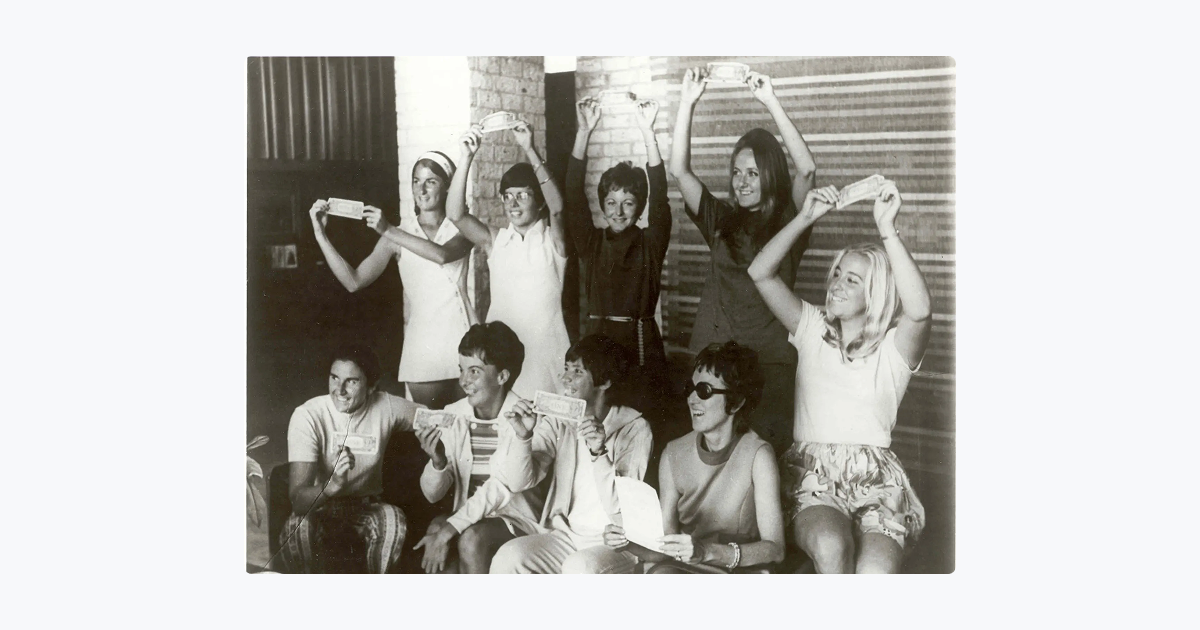
Images: The players known as the original nine, who started a pro tour. Top, from left: Valerie Ziegenfuss, Billie Jean King, Nancy Richey, Peaches Bartkowicz, Kristy Pigeon. Bottom, from left: Judy Tegart Dalton, Kerry Melville Reid, Rosie Casals, Gladys Heldman. Credit: Women’s Tennis Association
What happened after the 1972 US Open?
In the 1972 US Open final, Billie Jean King defeated Kerry Melville to win the tournament for the second consecutive year. Ilie Năstase beat Arthur Ashe in the men’s final. They received $10,000 and $25,000 respectively for their titles.
King used the attention surrounding her victory to raise the issue of unequal prize money publicly. She told the press that if the disparity remained, she would not return to play at the US Open the following year and did not expect the other professional women to compete either.
Her position created a practical problem for the organisers. The women’s professional tour was already attracting considerable attention, and King was one of its most prominent players. The next challenge was finding a way to fund equal prize money.
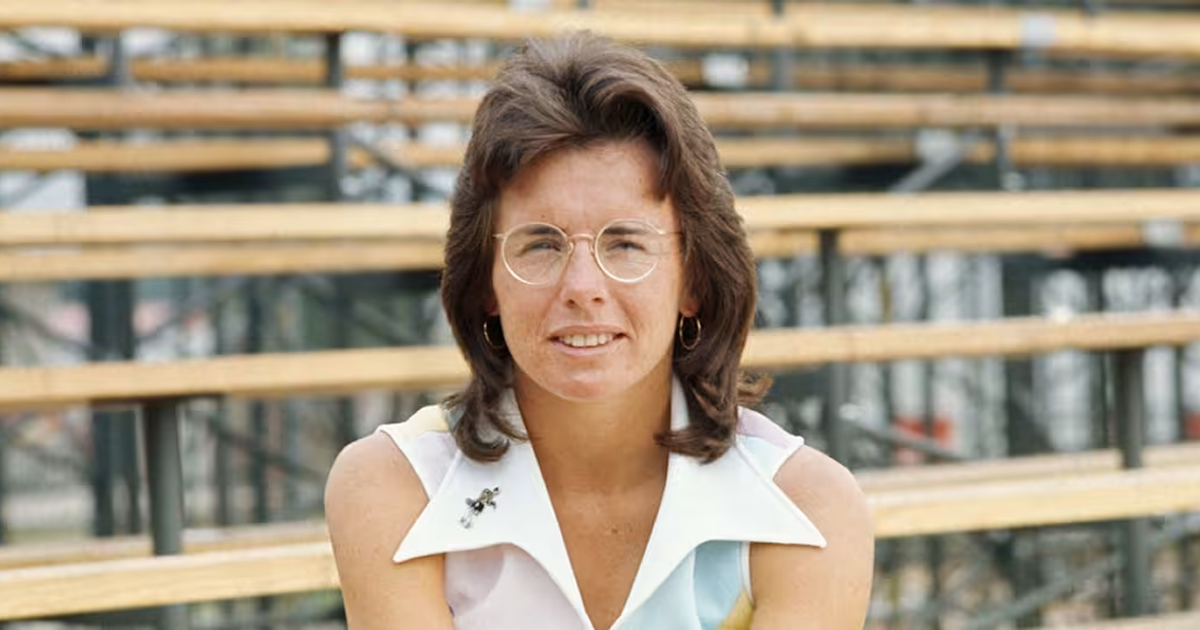
Images: Bettmann Archive
How did the US Open achieve equal prize money?
Following King’s statement, a way had to be found to increase the women’s prize fund. The idea of equal prize money also gained support within the US Open. Tournament director Bill Talbert, a former tennis player, backed the players’ demand, while King became involved in finding a commercial partner to help fund the change.
That partner was found in the summer of 1973. Ban, a deodorant brand owned by Bristol-Myers, contributed $55,000 to the women’s prize fund. With the additional funding, the US Open was able to offer equal prize money to women and men.
At the 1973 US Open, the men’s and women’s singles champions each received $25,000. The boycott King had spoken about a year earlier never became necessary. The US Open became the first Grand Slam tournament to award equal prize money to women and men.
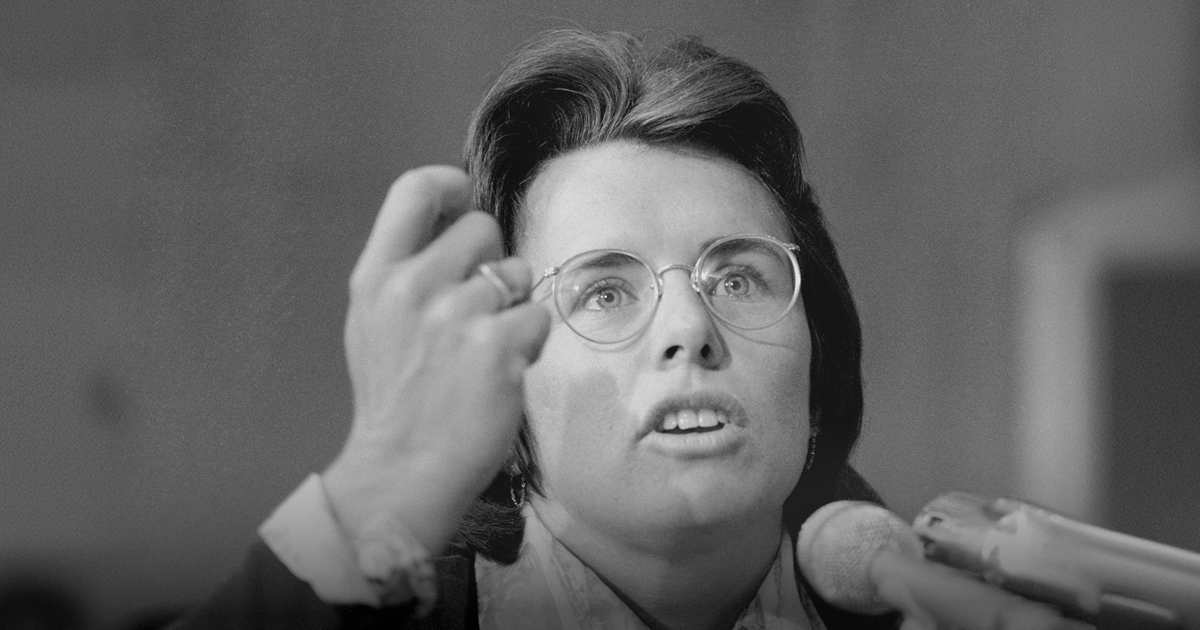
Images: Jimmie48/WTA
Who received the first equal winners’ prizes?
Interestingly, Billie Jean King, who had played a central role in bringing about the change, was not the first woman to receive the new winner’s cheque. Margaret Court won the women’s singles title at the 1973 US Open, defeating Evonne Goolagong 7–6, 5–7, 6–2 in the final. John Newcombe became the men’s champion after beating Jan Kodeš in five sets. Court and Newcombe each received $25,000.
For the first time in Grand Slam history, the women’s and men’s singles champions received equal prize money.
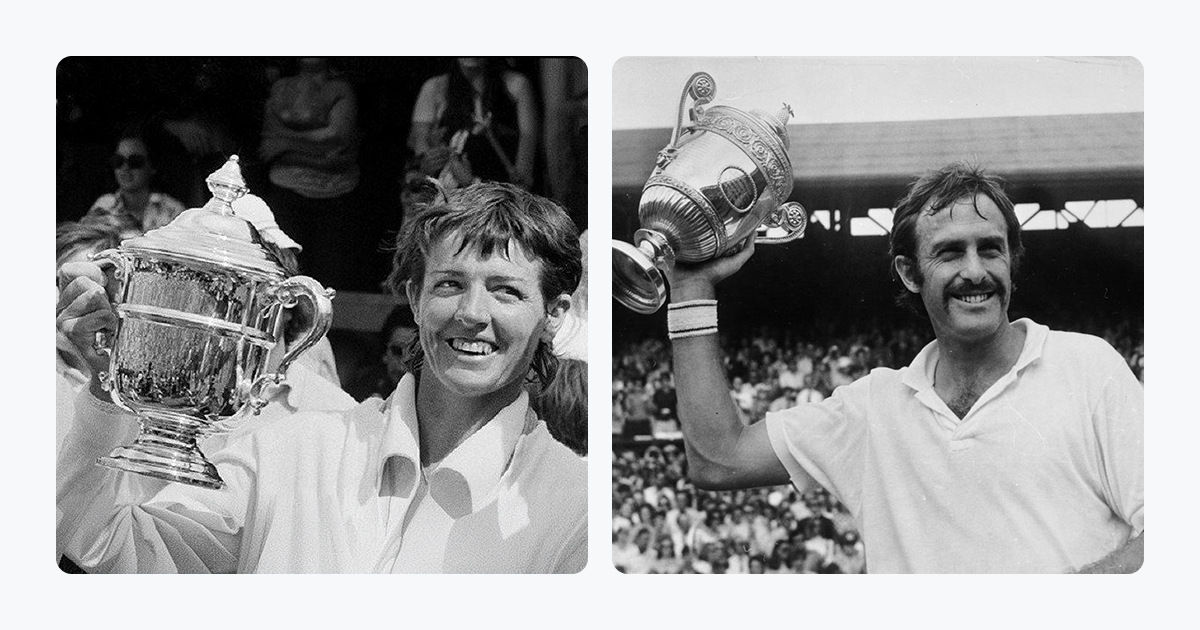
Images: Left Photo — Twitter/@WTA; Right Photo — alamy, Robert Dear
1973 also changed women’s tennis
The US Open’s decision was part of much broader changes taking place in women’s professional tennis. In June 1973, just before Wimbledon, 63 players gathered in London to establish the Women’s Tennis Association (WTA), with Billie Jean King becoming its first president.
For the first time, female players had a unified organisation through which they could collectively represent their interests and help shape the development of the women’s professional tour.
That same summer, the US Open announced equal prize money for women and men. Then, in September, King defeated Bobby Riggs in the Battle of the Sexes, a match watched by millions and one that brought even greater attention to women’s tennis.
The creation of the WTA, equal prize money at the US Open and the Battle of the Sexes were not part of a single campaign, but all three took place within a few months of one another in 1973. Together, they made that year one of the defining moments in the history of women’s professional tennis.
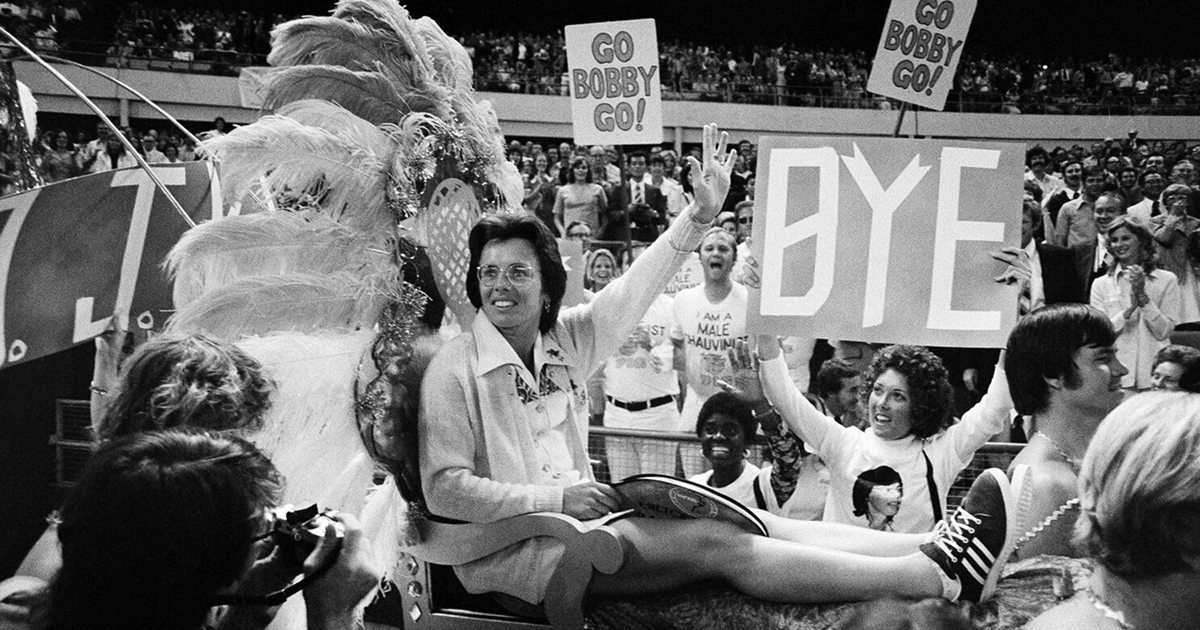
Images: Associated Press
Why didn’t the other Grand Slams follow immediately?
The US Open’s 1973 decision did not automatically establish a new standard across tennis. Each of the four Grand Slam tournaments had its own organisers and financial model and made its own decisions about prize money. A change at one tournament therefore did not require the others to follow.
The debate over equal prize money continued for decades. Arguments against equal pay included differences in the formats of men’s and women’s matches, tournament revenues and the perceived commercial appeal of the competitions. At the same time, women players continued to campaign publicly for equal prize money, while women’s tennis strengthened its position among audiences, the media and commercial partners.
Eventually, the Australian Open introduced equal prize money in 2001. Roland-Garros and Wimbledon followed in 2007, meaning that, for the first time, all four Grand Slam tournaments offered equal prize money to women and men.
It took 34 years for the standard first introduced by the US Open to be adopted across all four Grand Slams.